Psoriasis treatment in Bozeman
With care from board-certified dermatologists in Bozeman, MT and a personalized treatment plan, psoriasis can be effectively managed. Professional guidance helps reduce flare-ups, relieve discomfort, and support healthier skin over the long term.
-
8M
Americans with psoriasis
-
6 Types
Of psoriasis recognized
-
PASI-90
Achievable with modern biologics
-
30%
Also have psoriatic arthritis
Beyond the Surface: Managing Plaque Psoriasis
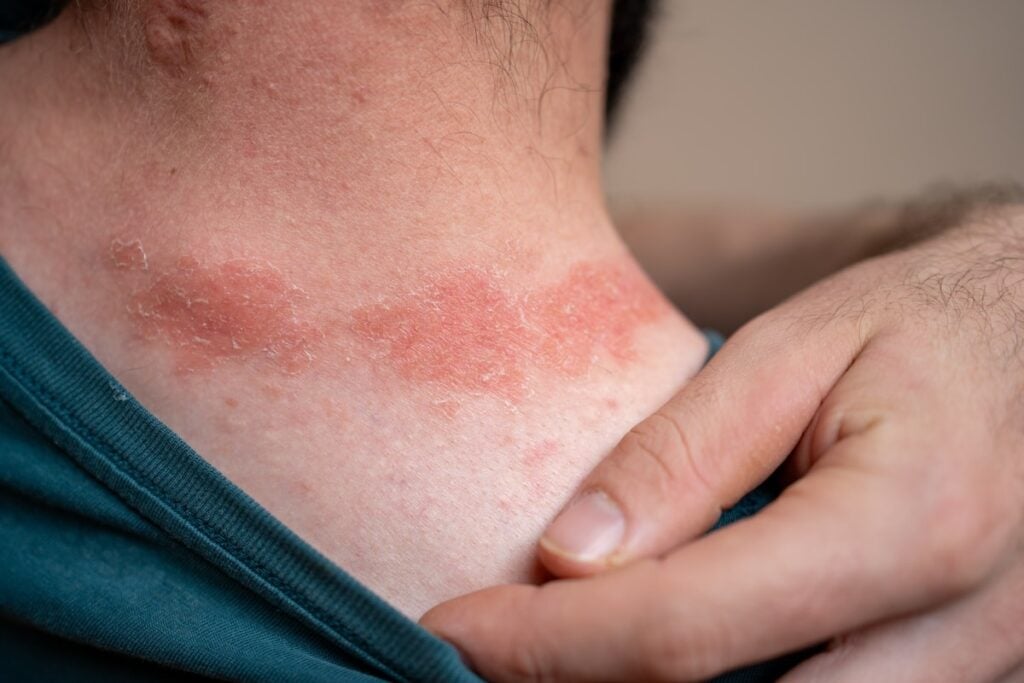
Psoriasis is often misunderstood as just “dry skin,” but for our patients in Bozeman, it is a daily battle with thick, itchy, or even painful plaques. If you find yourself constantly dealing with silvery scales on your elbows, knees, or scalp that bleed when snagged, you are dealing with more than a skin irritation—you are dealing with a systemic immune response. At Inverness Dermatology, we are dedicated to helping you achieve clear skin and long-term remission.
The Accelerated Life Cycle of a Skin Cell
In healthy skin, cells take about a month to grow and shed. In a patient with Psoriasis, this process is hyper-accelerated to just three or four days. This “pile-up” of skin cells creates the characteristic raised plaques. Because this is driven by the immune system, it is now classified as a systemic inflammatory condition, which is why a professional dermatological diagnosis is so critical.
Systemic and Targeted Psoriasis Care
We evaluate Plaque Psoriasis (ICD-10: L40.0) by measuring the Body Surface Area (BSA) affected and the impact on your quality of life.
How Treatment Works
At Inverness Dermatology, we target the T-cell mediated inflammatory cascade. For localized plaques, we utilize high-potency topical corticosteroids and Vitamin D analogues. For more widespread cases, we offer Narrowband UVB Phototherapy or advanced Biologic therapies, which work by precisely blocking the specific proteins (like TNF-alpha or IL-17) that trigger the skin’s overreaction.
EVIDENCE-BASED CARE
Our Treatment Approach
Board-certified dermatologists take a personalized approach to psoriasis care, focusing on symptom relief, long-term control, and overall skin health. With the right treatment plan, many patients achieve meaningful improvement and sustained relief.
Treatment Options for Psoriasis
- Topical Treatments
- Oral or Systemic Medications
- Biologic Therapies
- Light-Based Therapy
- Supportive Skin Care and Trigger Management
Psoriasis Types
Which type do you have?
-
Plaque Psoriasis
Most common (85–90% of cases). Well-defined red plaques with silvery scale on scalp, elbows, knees, and lower back.
-
Guttate Psoriasis
Small, drop-shaped lesions that appear suddenly — often triggered by streptococcal infection. Common in children and young adults.
-
Inverse Psoriasis
Smooth, red plaques in skin folds (armpits, groin, under breasts). Moisture worsens; requires different topical approach.
-
Pustular Psoriasis
White pustules surrounded by red skin. Generalized form (GPP) is a medical emergency requiring urgent treatment.
-
Erythrodermic Psoriasis
Widespread redness affecting >90% of body surface area. Life-threatening — requires immediate hospitalization.
-
Psoriatic Arthritis
Joint inflammation occurring in up to 30% of psoriasis patients. Early treatment prevents irreversible joint damage.
PATIENT QUESTIONS
Psoriasis FAQ
Clinical answers from our board-certified dermatologists.
What causes psoriasis?
Psoriasis is caused by an overactive immune response that speeds up skin cell turnover, leading to thickened, scaly patches. Genetics and environmental triggers such as stress, illness, or skin injury may play a role.
Is psoriasis contagious?
No. Psoriasis is not contagious and cannot be spread through physical contact. It is an immune-mediated condition, not an infection.
Can psoriasis be cured?
Psoriasis cannot be cured, but it can be effectively managed. Many patients experience long periods of improvement with appropriate dermatologic care and treatment.
What triggers psoriasis flare-ups?
Common triggers include stress, illness, cold weather, skin injury, and certain medications. Board-certified dermatologists can help identify individual triggers and recommend strategies to reduce flare-ups.
When should I see a dermatologist for psoriasis?
If you have persistent scaling, itching, or plaques that do not improve with over-the-counter treatments—or if symptoms affect your comfort or daily life—it’s recommended to seek care from board-certified dermatologists in Bozeman, MT for proper diagnosis and management.
Participating Plans and Payment Methods*








* Please not all treatments and procedures are fully covered by insurance, if you are unsure please call our office at (406) 587-4432.