Mohs Surgery treatment in Bozeman
A precise surgical technique used to treat skin cancer by removing layers of tissue one at a time and examining them under a microscope until only cancer-free tissue remains.
Precision Skin Cancer Treatment
with High Cure Rates
Mohs surgery offers one of the highest success rates of any skin cancer treatment available.
Because the surgeon examines the tissue during the procedure, Mohs surgery can confirm that all cancer cells have been removed before reconstruction begins.
Key benefits of Mohs surgery include:
- Up to 99% cure rate for many primary skin cancers
- Precise removal of cancer while preserving healthy tissue
- Immediate microscopic analysis during surgery
- Excellent cosmetic outcomes, especially on the face
This meticulous approach allows dermatologic surgeons to treat skin cancer with exceptional accuracy and confidence.
Why Patients Choose Mohs Surgery
Patients often choose Mohs surgery when skin cancer occurs in areas where preserving healthy skin is important or when the cancer has a higher risk of recurrence.
Mohs surgery is commonly recommended for:
• Basal cell carcinoma
• Squamous cell carcinoma
• Skin cancers on the face, nose, ears, lips, or eyelids
• Recurrent or aggressive skin cancers
• Skin cancers with unclear borders
Because Mohs surgery removes only tissue containing cancer cells, it provides both high cure rates and tissue preservation.
Schedule a Skin Cancer Consultation with SkinCare MT
SURGICAL EXPERTISE
Fellowship-Trained Mohs Surgeons
Dr. Aaron Bruce has performed over 12,000 Mohs surgical procedures since 2009.
Dr. Molly Buckland specializes in the prevention, diagnosis, and treatment of skin cancer,
STEP-BY-STEP
The Mohs Process
-
The Layer
The surgeon removes the visible tumor along with a very thin layer of tissue.
-
Mapping
The tissue is color-coded with dyes and a map is drawn to match the surgical site.
-
Processing
The tissue is flash-frozen and sliced into microscopic sections in an on-site lab.
-
Micro-Exam
The surgeon examines the slides. If cancer cells are seen at any edge, they go back to only that specific spot.
-
Repair
Once the margins are "clear," the surgeon discusses the best way to close the wound (stitches, skin graft, or natural healing).
MOHS SURGERY VISUALIZED
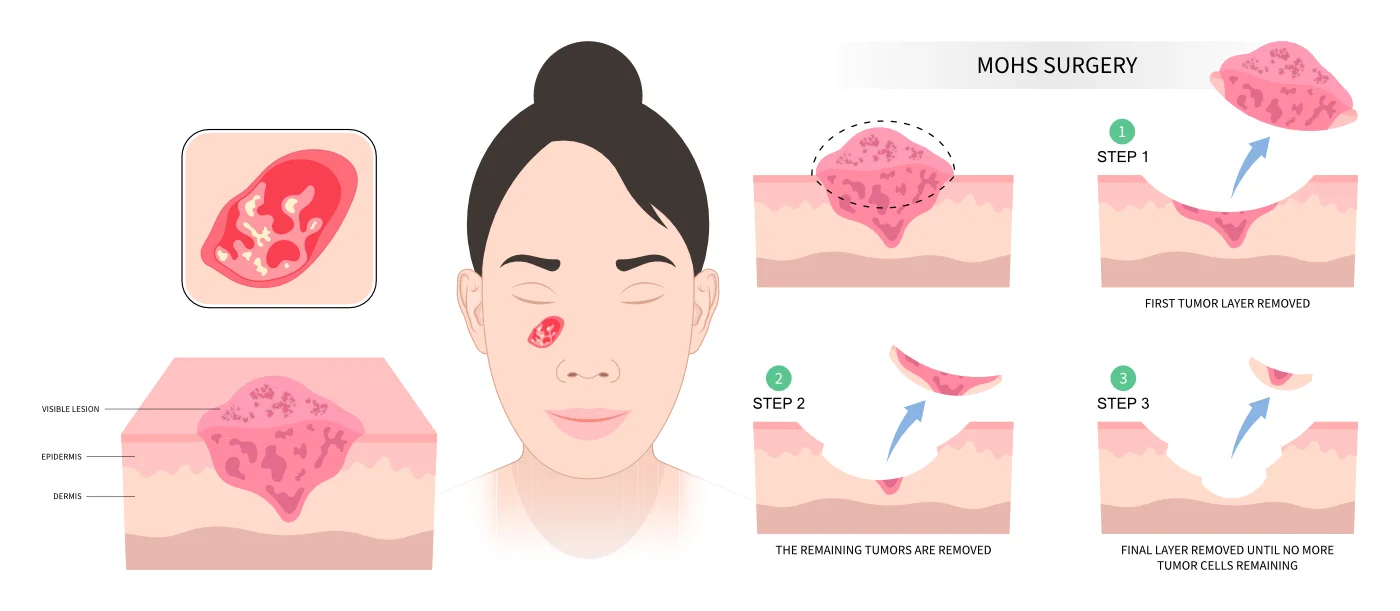
Layer by Layer: How Mohs Surgery Works
Mohs surgery is uniquely precise, targeting only the cancerous “roots” while sparing as much healthy skin as possible. This meticulous, layer-by-layer approach ensures the smallest possible surgical footprint.
To complement this precision, Dr. Aaron Bruce utilizes advanced reconstruction techniques to repair the site. His expertise in aesthetic closure focuses on preserving natural contours and minimizing scarring, ensuring your path to being cancer-free is matched by a seamless recovery.
Prevention and Early Detection
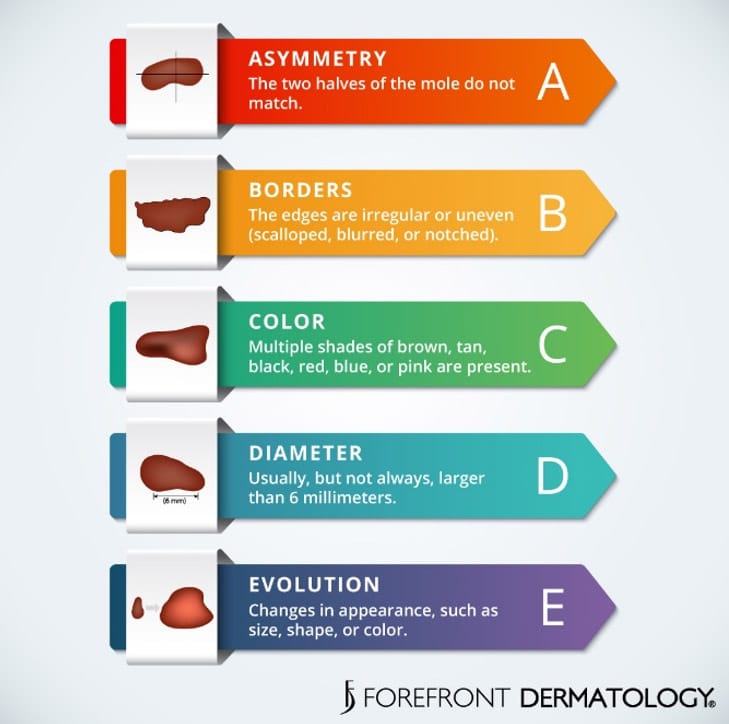
The ABCDEs of Skin Cancer
While Mohs micrographic surgery offers the highest cure rate for many forms of skin cancer, the most effective tool in your skincare arsenal is early detection. Catching skin cancer in its initial stages often means a simpler, less invasive treatment and a smoother recovery.
Performing regular self-examinations at home—at least once a month—allows you to become familiar with the baseline of your skin. By knowing what is normal for your body, you are much better equipped to spot new growths or changes to existing spots before they develop into a serious concern.
PATIENT QUESTIONS
Mohs Surgery FAQ
Clinical answers from our board-certified dermatologists.
Do I need an annual routine skin examination or a “mole check”?
Most patients consult a dermatologist for new or changing skin growths. For all adult patients it is useful to have a baseline comprehensive skin exam to answer three questions: What is the status of my skin? How do I protect my skin? Do I need a regular skin exam?
Patients who need a regular skin exam often have a history of skin cancer, actinic keratosis, or multiple large and abnormal moles. Patients over 50 who have blue eyes plus very fair skin and/or severely sun-damaged skin, and patients taking immunosuppressive medication also need an annual comprehensive skin exam from a board-certified dermatologist.
Does Mohs surgery take a long time?
The surgery itself is quick, but the lab work takes time. Most patients should expect to spend half a day (3–5 hours) at the office. You spend most of that time in a waiting room with a bandage while the lab processes your tissue.
Will it leave a scar?
Yes, any surgery that cuts the skin leaves a scar. However, Mohs is designed to make that scar as small as possible by preserving healthy tissue. Dr. Aaron Bruce is highly trained in reconstructive techniques to make the scar blend into natural skin lines.
Is the procedure painful?
Most patients report very little discomfort. The area is completely numbed with local anesthesia (similar to a dental procedure). You are awake the entire time and can talk, read, or listen to music.
Can Mohs be used for Melanoma?
Historically, Mohs was mainly for Basal and Squamous cell cancers. However, in 2026, many specialized centers use “Slow Mohs” or MART-1 immunostaining to successfully treat certain types of Melanoma (like Lentigo Maligna) with high precision.
What is the recovery like?
Most people return to normal activities within a few days. You will likely have a “pressure bandage” for the first 24–48 hours to prevent swelling and bruising, and stitches are typically removed 1–2 weeks later.