Acne treatment in Bozeman
With expert care from board-certified dermatologists in Bozeman, MT and a personalized treatment plan, acne is manageable and treatable. Professional guidance can help you move beyond temporary fixes toward clearer, healthier skin.
-
50M+
Americans affected by acne
-
85%
Experience acne by age 24
-
4 Types
Of acne treatment pathways
-
95%+
Clearance with isotretinoin
Clear Skin Science: Beyond the Surface of Adult and Teen Acne
For many in Bozeman acne is a source of daily frustration that doesn’t always disappear after the teenage years. Whether you are dealing with persistent “maskne,” hormonal breakouts along the jawline, or deep, painful cysts, acne is more than just a cosmetic concern—it is an inflammatory condition that impacts your confidence and skin health. At SkinCare MT we move past the “one-size-fits-all” drugstore solutions to provide a clinical path to clear, healthy skin.
The Anatomy of a Breakout
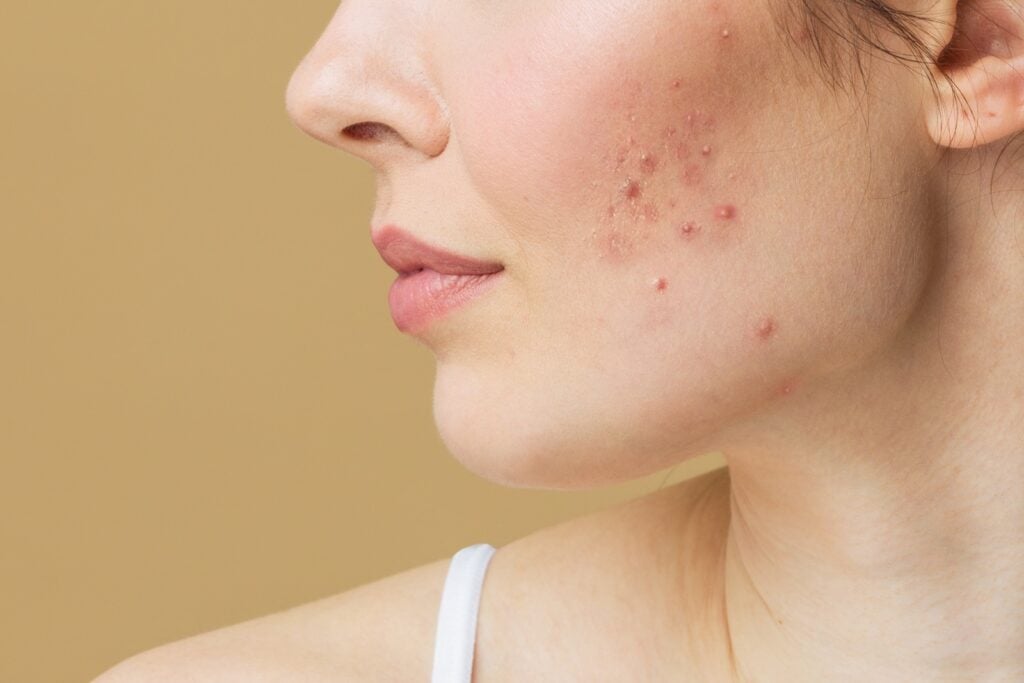
Clinically known as Acne Vulgaris, this condition is a disorder of the pilosebaceous unit (the hair follicle and its associated oil gland). It is driven by four primary factors: excess oil production, the buildup of dead skin cells (keratinization), the presence of C. acnes bacteria, and the resulting inflammation. When these factors converge, they create an “impaction” that leads to everything from closed comedones (whiteheads) to inflammatory papules and nodules.
Targeted Acne Protocols at Bozeman
We categorize Acne Vulgaris (ICD-10: L70.0) by its primary lesion type to ensure the most effective medical intervention.
Our team focuses on safe, sustainable progress. Treatment plans are dynamic, structured to clear active breakouts, prevent future flare-ups, and rigorously monitor your response to care. A critical pillar of our trust promise is scar prevention. We prioritize early, effective intervention to minimize the lifetime risk of permanent acne scarring and post-inflammatory hyperpigmentation, protecting the integrity of your skin long after the breakouts have healed.
How Treatment Works
Our approach focuses on Follicular Debridement and Bacterial Suppression. We utilize medical-grade retinoids to normalize cell turnover and prevent the “plugging” of pores. For inflammatory cases, we incorporate Blue Light Therapy or specialized chemical peels that utilize Salicylic and Glycolic acids to penetrate deep into the sebum-filled follicle, neutralizing bacteria and calming the inflammatory response at the source.
EVIDENCE-BASED CARE
Our Treatment Approach
SkinCare MT’s Board-certified dermatologists are specially trained to diagnose the type and cause of acne and provide evidence-based treatments that go beyond trial-and-error.
Treatment options for acne
-
Customized Topical & Oral Regimens
-
Cystic Acne Interventions
-
Acne Scar Resurfacing
Acne Types
Which type do you have?
-
Comedonal Acne
Non-inflammatory whiteheads and blackheads. Responds well to topical retinoids and salicylic acid.
-
Inflammatory Acne
Red papules and pustules caused by bacterial overgrowth and immune response.
-
Nodular Acne
Deep, painful nodules that can persist for weeks. Risk of permanent scarring without treatment.
-
Cystic Acne
Large, fluid-filled cysts. Most severe form; associated with significant scarring risk. Often requires isotretinoin.
-
Hormonal Acne
Predominantly in adult women along the jawline and chin, triggered by hormonal fluctuations.
-
Acne Conglobata
Rare, severe form with interconnected nodules and cysts. Requires specialist management.
PATIENT QUESTIONS
Acne FAQ
Clinical answers from our board-certified dermatologists.
When should I see a dermatologist for acne?
You should consider seeing a dermatologist if your acne is persistent, painful, causing scarring or dark marks, or affecting your confidence — especially if over-the-counter products haven’t helped. Board-certified dermatologists are specially trained to diagnose the type and cause of acne and provide evidence-based treatments that go beyond trial-and-error. Early care often leads to faster results, fewer flare-ups, and a lower risk of long-term skin damage.
Why do I still have acne as an adult?
Adult acne is very common and not a reflection of poor skincare. Hormonal changes, stress, genetics, certain medications, and even well-intentioned skincare products can all contribute. A dermatologist can help identify the underlying cause and create a treatment plan that addresses your skin — not just the symptoms.
Will my acne leave permanent scars — and can that be prevented?
Not everyone with acne develops scars, but untreated or inflamed acne increases the risk. The good news is that early, appropriate treatment significantly reduces scarring and dark marks. If scarring has already occurred, there are effective treatments available to improve skin texture and tone over time.
Do I need prescription treatment, or can over-the-counter products work?
Mild acne may improve with over-the-counter products, but persistent, hormonal, or cystic acne often requires prescription treatment. Seeing a dermatologist helps avoid trial-and-error and unnecessary irritation. Prescription options are carefully selected to be safe, effective, and tailored to your skin type and concerns.
What is the best acne treatment for my skin?
There is no one-size-fits-all solution. Acne varies widely in cause and severity, which is why a personalized approach matters. Your dermatologist will evaluate your skin, medical history, and goals to recommend the most effective combination of treatments — whether topical, oral, or procedural.
Participating Plans and Payment Methods*






* Please not all treatments and procedures are fully covered by insurance, if you are unsure please call our office at (406) 587-4432.