Skin Cancer treatment in Bozeman
Hearing the words “skin cancer” is a moment that changes everything. Whether you’ve noticed a spot that won’t heal, a changing mole, or have received a definitive diagnosis, the path forward can feel overwhelming. At SkinCare MT our board-certified dermatologists believe that fear is best met with prevention and expertise.
-
1 in 5
develop skin cancer by the age of 70
-
9,500
per day are diagnosed with skin cancer
-
99%
5-year melanoma survival rate when detected early
-
98%
Mohs Surgery cure rate
Navigating Your Skin Cancer Journey with Confidence
Serving the Bozeman and surrounding communities, we provide a sanctuary of clinical excellence. We understand that you aren’t just looking for a procedure; you are looking for a cure and the peace of mind that comes with being in the hands of leading experts. From your initial screening to the most advanced surgical interventions, we walk this path with you, prioritizing your health, your recovery, and your future.
Understanding the Spectrum of Skin Malignancy
Skin cancer is the most common form of cancer in the United States, but it is also one of the most treatable when caught early. It occurs when the DNA in your skin cells becomes damaged—primarily by ultraviolet (UV) radiation—causing them to grow uncontrollably into tumors.
At SkinCareMT, we manage the three primary types of skin cancer, each requiring a distinct clinical approach.
Leading Experts in Bozeman Advanced Treatment Modalities
SkinCare MT is recognized as a center of excellence for skin cancer oncology. Our board-certified dermatologists and fellowship-trained surgeons led by Dr. Aaron Bruce and Dr. Molly Buckland – utilize a “multimodal” approach, selecting the most effective intervention based on the tumor’s type, location, and histological grade.
The Mohs and Excision Advantage
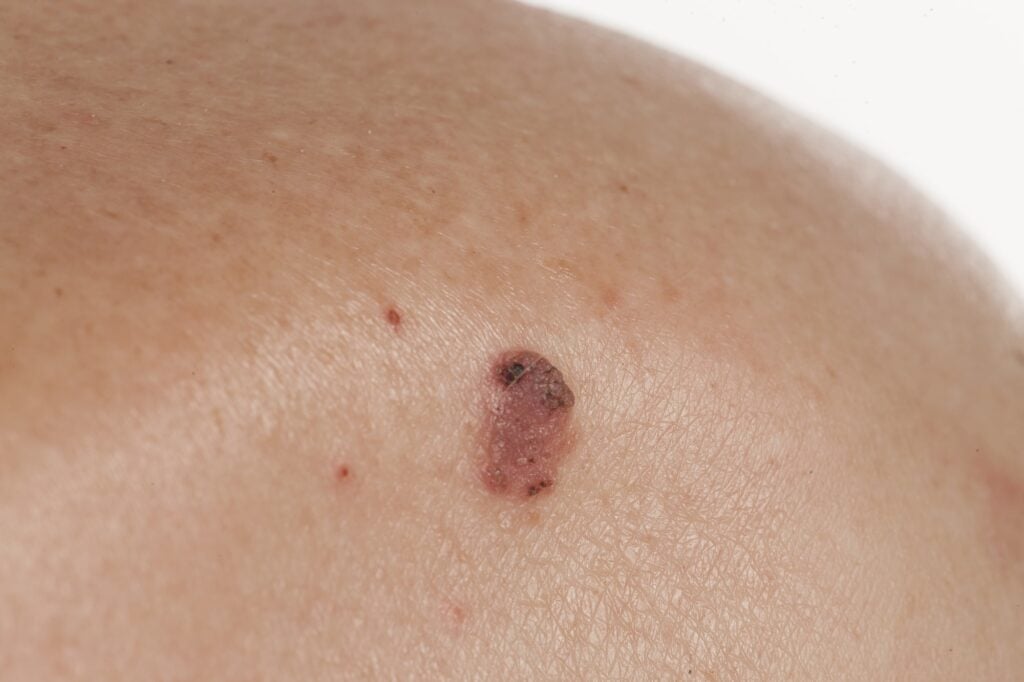
At SkinCare MT we specialize in Mohs Micrographic Surgery, the most advanced and effective treatment for skin cancer available today. Unlike standard surgery where a sample is sent to a lab days later, Mohs surgery allows our surgeons to act as both the physician and the pathologist.
EVIDENCE-BASED CARE
Our Treatment Approach
Treatment for skin cancer in 2026 is highly personalized, ranging from quick office procedures to advanced “systemic” therapies that use your own immune system to fight the disease.
Surgical Treatments for Skin Cancer
- Mohs Micrographic Surgery: As discussed, this offers the highest cure rate (up to 99%) by checking 100% of the margins under a microscope during the procedure. It is the preferred choice for the face and sensitive areas.
-
Standard Surgical Excision: The surgeon cuts out the tumor along with a safety margin of healthy skin. This is the standard for most localized cancers.
-
Curettage and Electrodesiccation (C&E): Often called “scrape and burn,” this is used for small, superficial BCCs or SCCs. The doctor scrapes away the soft cancer tissue and uses an electric needle to kill any remaining cells.
Skin Cancer Types
Which type do you have?
-
Basal Cell (BCC)
The most common cancer in humans; roughly 3.6 million cases are diagnosed in the US annually (about 80% of all skin cancers). Severity: Low.
-
Squamous Cell (SCC)
The second most common type; approximately 1.8 million cases are diagnosed each year in the US. Severity: Moderate, highly treatable.
-
Melanoma
Accounts for only about 1% of skin cancers but is the most well-known; roughly 234,680 cases (invasive and in situ) are projected for 2026. Severity: High; deadliest form.
PATIENT QUESTIONS
Skin Cancer FAQ
Clinical answers from our board-certified dermatologists.
How do I know if a spot is skin cancer?
The most effective way to monitor your skin is the ABCDE rule for moles and the “Ugly Duckling” sign for other lesions. You should look for:
-
Asymmetry: One half doesn’t match the other.
-
Border: Irregular, ragged, or blurred edges.
-
Color: Multiple shades of brown, black, red, or blue.
-
Diameter: Larger than a pencil eraser ($6mm$).
-
Evolving: Any spot that changes in size, shape, or color, or starts to itch or bleed.
If you have a “sore that won’t heal” or a “pimple” that bleeds and returns, it requires a professional evaluation.
Is skin cancer curable?
Yes. When detected early, the vast majority of skin cancers—including Basal Cell Carcinoma (BCC), Squamous Cell Carcinoma (SCC), and even Melanoma—have an extremely high cure rate. At SkinCare MT, we utilize Mohs Micrographic Surgery, which offers the highest cure rate (up to 99%) for the most common types of skin cancer while preserving the maximum amount of healthy tissue.
What is the difference between a "spot check" and a "Total Body Skin Exam"?
A “spot check” focuses only on one specific area of concern. A Total Body Skin Exam (TBSE) is a comprehensive, head-to-toe clinical evaluation. Our providers at SkinCare MT use Dermoscopy—a specialized light and magnification tool—to see structures within the skin that are invisible to the naked eye. We recommend a TBSE at least once a year for residents in Bozeman, especially those with a history of sun exposure.
Will I have a scar after skin cancer surgery?
Any time the skin is incised, a scar will form. By using the Mohs technique, we minimize the size of the wound. We then utilize plastic surgery closure techniques, often hiding the incision within the natural “tension lines” (Langer’s Lines) of your face to ensure the final result is as seamless as possible.
Does a skin cancer diagnosis mean I can't go in the sun anymore?
Not at all. It means you need to practice “Smart Sun Science.” After treatment at SkinCare MT, we provide a personalized photoprotection plan. This includes using broad-spectrum SPF 30+, wearing UPF-rated clothing, and avoiding peak UV hours in Bozeman. Our goal is to keep your skin healthy so you can continue to enjoy your lifestyle safely.
If my biopsy comes back as "atypical," does that mean I have cancer?
Not necessarily. An Atypical (Dysplastic) Nevus is a mole that looks unusual under the microscope but is not yet cancerous. We view these as “warning signs.” Depending on the level of atypia (mild, moderate, or severe), a SkinCare MT physician may recommend a small “safety margin” excision to ensure the spot never has the chance to evolve into a melanoma.
Participating Plans and Payment Methods*




* Please not all treatments and procedures are fully covered by insurance, if you are unsure please call our office at (406) 587-4432.